Emergency Tile & Grout Repair in Ottawa: What Actually Counts as an Emergency
A cracked tile is not usually an emergency.
If one bathroom tile has a hairline crack and everything around it is dry and solid, you can probably wait for a regular repair appointment.
The situation changes when there is active water damage, a serious trip or cut hazard, an electrical problem, or a tiled surface that is suddenly moving or lifting.
That distinction matters. Calling an emergency service for every cracked tile can turn a simple repair into an unnecessary expense. Ignoring a leak or dangerous floor can do the opposite and allow a small problem to become much more expensive.
In this guide, “emergency” means an immediate safety or active-damage situation. “Urgent” means the problem should be addressed soon, but does not normally require emergency intervention.
Here is how to assess the common situations.
Quick Guide
| Problem | Priority | First step |
|---|---|---|
| Water is actively entering a wall, floor, or ceiling | Emergency | Stop using the fixture and isolate the water if safe |
| Water has reached electrical equipment | Emergency | Stay away from the area and shut off power only if it is safe |
| Broken tile creates a sharp edge or serious trip hazard | Emergency | Keep people away from the area |
| Several floor tiles suddenly lift or buckle | Urgent | Keep traffic off the area and arrange an inspection |
| Heated floor has an electrical fault or repeatedly trips a breaker/GFCI | Emergency | Stop using the heating system and contact an electrician |
| Loose shower tile with no signs of water damage | Prompt | Limit water exposure and arrange an inspection |
| Cracked shower grout | Prompt | Have it assessed before the condition gets worse |
| One cracked tile in a dry, stable area | Routine | Schedule a normal repair |
| Dirty or stained grout | Routine | Clean, restore, or replace as needed |
The visible symptom does not always tell you what failed underneath. A leaking shower, for example, could involve plumbing, the drain, waterproofing, or the tile assembly itself.
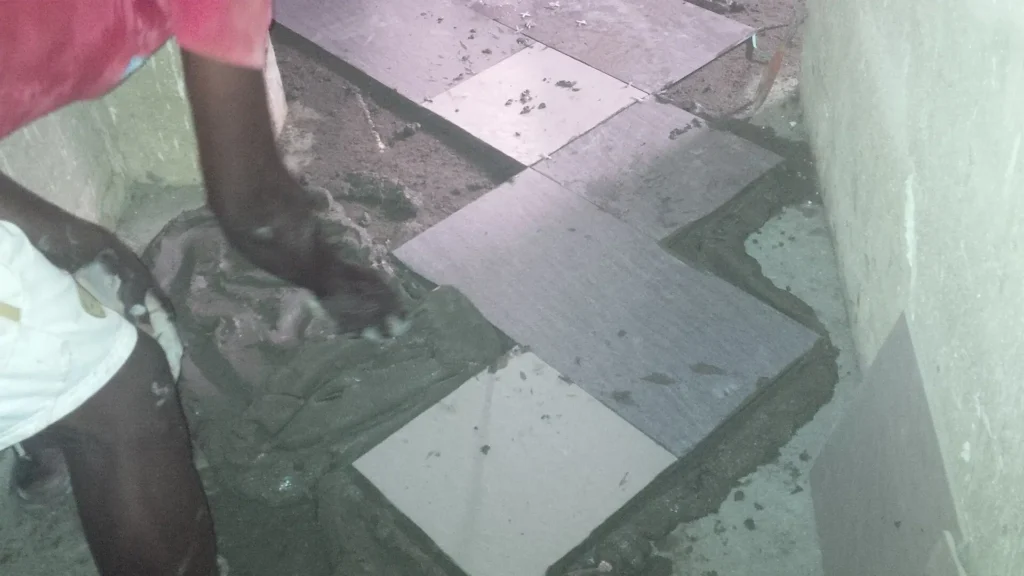
When Is a Tile Problem Actually an Emergency?
Start with three questions:
- Is water actively getting somewhere it should not?
- Is someone at immediate risk of being injured?
- Is the tiled surface suddenly moving, lifting, or failing?
If the answer to any of these is yes, take immediate safety precautions and arrange the appropriate repair.
A cosmetic crack is different from a tile that has become a trip hazard. Minor grout deterioration is different from water showing up on the ceiling below a shower.
The important thing is to look at what the damage is doing, not just what it looks like.
1. Water Damage Behind or Around Tile
Active water damage is one of the clearest reasons to stop using a tiled area.
Showers and tubs deserve particular attention. Tile and grout are the finished surface, but they are not, by themselves, the waterproofing system. A properly constructed tiled shower relies on the complete assembly, including waterproofing, substrate, drainage, joints, and transitions, to manage moisture.
That means a leak cannot always be diagnosed by looking at the grout.
Signs that a shower or tub needs investigation
Watch for:
- Water showing up on the ceiling below a bathroom
- Dampness outside the shower
- Staining or bubbling paint near the enclosure
- A persistent musty smell
- Tile that moves when pressed
- Water remaining after the shower has been unused
- Caulk or grout that repeatedly fails
- Moisture appearing in an area that should stay dry
None of these symptoms automatically proves that the tile installation is responsible. A leaking pipe, valve, drain, or plumbing connection can produce similar signs.
What should you do?
Stop using the shower or tub until the source is understood.
If water is still flowing and there is an accessible shut-off valve, close it if you can do so safely. Take photos of the damage and arrange an inspection.
If the problem turns out to be plumbing, a plumber should deal with that portion before the tile is repaired.
If the problem involves the shower assembly or waterproofing, tile may need to be removed so the area underneath can be inspected.
For related work, see waterproofing and shower pan installation and shower tile installation.
Don’t Just Caulk Over a Leak
Putting silicone over a cracked joint can make the surface look better. It does not tell you why water is getting through.
If there is already concealed moisture, covering the visible crack may simply hide the symptom.
Depending on what is found, the repair might be as simple as replacing a failed joint. It could also involve removing tile, repairing waterproofing, fixing a drain or plumbing connection, or rebuilding part of the shower.
The repair should follow the cause, not the appearance.
2. Heated Floors and Electrical Problems
A cracked tile above a heated floor does not automatically mean the heating cable has been damaged.
The situation is different if the crack is accompanied by an electrical problem.
Examples include:
- The heating system develops a persistent cold section
- The thermostat shows a fault
- The breaker or GFCI repeatedly trips
- There is a burning or melting-plastic smell
- Electrical components appear damaged
- Wiring has become exposed
Stop using the heating system if you notice these symptoms and have the electrical side checked by a qualified electrician.
Do not start prying out the tile without considering what is underneath it. Electric floor-heating systems can place heating cables or elements directly below the tile installation, and careless removal can cause additional damage.
Tiles Experts can handle the tile portion of heated floor installation and tile repairs around existing heating systems. Electrical diagnosis and repair should be handled by an electrician.
3. Broken Tile That Creates a Safety Hazard
A broken tile becomes an emergency when somebody can realistically get hurt because of it.
For example:
- A sharp edge is exposed in a walking area
- The tile rocks significantly underfoot
- One edge has lifted enough to catch a shoe
- Broken pieces are scattered across the floor
- A loose tile is located in a busy commercial entrance
The first job is to make the area safe.
At home, close the room or block off the damaged section. In a commercial property, keep customers and employees away from the hazard until it has been dealt with.
Do not depend on a small piece of tape to make a seriously damaged floor safe.
4. Tiles That Suddenly Lift or Buckle
If several floor tiles suddenly push upward, buckle, or form a ridge, do not treat it like a normal cracked-tile replacement.
This is commonly referred to as tile tenting.
There can be several reasons for movement in a tiled floor, including substrate movement, temperature changes, moisture, installation conditions, and insufficient accommodation for movement.
The important point is that the cause needs to be investigated.
Do not simply push the tiles back down or glue them into position. If the underlying problem remains, the same thing can happen again.
Keep people off the affected section and arrange an inspection.
Problems That Usually Can Wait
Not every tile problem requires someone at the door the same day.
A normal repair appointment is usually appropriate for things such as:
- One cracked wall tile in a dry room
- A small chip in a decorative tile
- Stained grout
- Minor grout deterioration in a dry area
- A dull or scratched stone surface
- A loose decorative mosaic piece
- A stable tile that is cracked but not moving
That can change if the symptoms change.
If water appears, the crack spreads, the tile starts moving, or the damaged area becomes a safety hazard, the priority changes.
What About Cracked Grout in a Shower?
Cracked shower grout should not be ignored, but it is not automatically an emergency.
Grout can crack for several reasons. Movement in the tile assembly is one possibility, but deterioration and installation-related issues can also be involved.
A closer inspection is warranted if:
- The crack keeps coming back
- Tiles around the joint are moving
- The joint is getting wider
- There is persistent moisture
- Water is appearing outside the shower
- The wall or surrounding materials show signs of damage
If it is simply deteriorated grout with no evidence of active water damage, it can generally be scheduled as a regular repair.
For routine work, see tile and grout repair in Ottawa.
Dark or Mouldy-Looking Grout
Discoloured grout is usually a maintenance issue rather than an emergency.
Soap, dirt, staining, moisture, and surface growth can all change the appearance of grout. Cleaning may be enough. Severely deteriorated grout may need to be replaced.
It is worth investigating if the grout stays unusually dark after cleaning, crumbles easily, or is accompanied by persistent moisture or a musty smell.
For cleaning and maintenance, see grout cleaning and sealing.
Which Trade Should You Call?
This is where things can get confusing because tile problems and building problems often overlap.
A plumber is generally the right first call for:
- A leaking supply pipe
- A leaking shower valve
- A leaking drain
- A toilet connection
- A failed plumbing fitting
- Water appearing even when the fixture has not been used
An electrician should handle:
- Damaged or exposed wiring
- Repeated breaker or GFCI trips
- Burning electrical smells
- Electrical equipment affected by water
- Suspected faults in electric floor heating
A tile contractor can handle:
- Cracked or loose tile
- Tile replacement
- Deteriorated grout
- Tile substrate issues
- Shower tile removal and replacement
- Tile-related waterproofing work within the contractor’s scope
A restoration company may be needed when:
- There has been substantial water intrusion
- Drywall or insulation is significantly wet
- There is extensive concealed moisture
- The area needs professional drying and moisture monitoring
Some jobs require more than one trade. For example, a leaking shower could involve a plumber, a restoration company, and a tile contractor.
What to Do During the First Hour
If you discover a potentially serious tile problem, do not immediately start removing tile.
The first priority is to stop the source, protect people, and prevent additional damage.
1. Stop using the fixture
If a shower, tub, sink, or toilet appears to be involved, stop using it.
If water is still flowing, shut off the local supply if there is an accessible valve and you can operate it safely.
2. Stay away from wet electrical equipment
If water has reached outlets, switches, appliances, floor-heating controls, or other electrical equipment, do not touch the wet equipment.
If the power can be shut off safely from a dry location, do so. Otherwise, contact a qualified electrician or emergency service as appropriate.
3. Keep people away
Block off damaged flooring.
This is particularly important if the tile is loose, sharp, raised, or surrounded by standing water.
4. Take photographs
Photograph the damaged tile and the surrounding area before making changes, provided it is safe to do so.
If there is water damage, photograph the walls, ceiling below, flooring, and any visible standing water as well.
5. Contain water only when it is safe
Towels and containers can help with standing water if the area is safe to enter.
If a ceiling is visibly bulging from water, keep people out from underneath it. Do not try to open or repair the ceiling yourself.
6. Keep broken tile pieces
If the tile has broken, keep the pieces if possible. They can help identify the size, colour, finish, and product.
Spare tiles from the original installation are even better.
7. Do not hide the damage
Avoid covering a suspicious area with fresh grout, silicone, adhesive, or waterproofing before it has been assessed.
A patch can make the surface look finished without solving what caused the damage.
8. Contact your insurer when appropriate
If there is significant or sudden water damage, contact your insurer and ask what documentation and mitigation steps they require.
Coverage varies by policy and by the circumstances of the damage.
What Information Should You Give the Contractor?
A few basic details can make the initial conversation much more useful.
Have these ready:
- Which room is affected
- What fixture or surface is involved
- When you first noticed the problem
- Whether water is currently present
- Whether the area is still being used
- Whether the tile is moving
- Whether a breaker or GFCI has tripped
- Photos of the damage
- The tile size and type, if known
- Any spare tiles you have
It is also useful to mention whether the problem appeared suddenly or has been getting worse over several weeks or months.
Emergency Repair Does Not Always Mean a Full Rebuild
The first priority is to control the immediate problem.
That might mean stopping water use, securing a dangerous floor, removing one loose tile, or opening a small section so the condition underneath can be checked.
The permanent repair comes after that.
Depending on what is found, the job might be:
A spot repair:
A few tiles or joints are replaced.
A section repair:
A larger area is removed so the substrate or waterproofing can be inspected and repaired.
A full rebuild:
The underlying failure is extensive enough that part or all of the tiled assembly needs to be reconstructed.
A photograph can help identify the visible problem, but it cannot always show what is happening behind the tile.
Finding a Matching Replacement Tile
A one-tile repair is easy only if you have the right replacement.
Tile products are frequently discontinued, and even tiles that look similar can differ in size, finish, texture, or colour.
If you have leftover tiles from the original installation, keep them.
If an exact replacement is no longer available, the options may include using the closest match, replacing a larger section, or intentionally changing the design in the affected area.
Which option makes sense depends on where the damaged tile is located and how visible the repair will be.
Commercial Tile Emergencies
A tile that is merely inconvenient in a private room can become a serious problem in a commercial property.
A loose tile in an entrance, lobby, restaurant, retail store, or office corridor can be exposed to many people during the day.
Common commercial problems include:
- Broken entrance tiles
- Raised edges
- Loose tiles in high-traffic areas
- Damaged tiles beneath carts or equipment
- Missing or deteriorated grout
- Sections of floor that have started lifting
- Water damage around washrooms or kitchens
The immediate priority is to keep people away from the hazard.
After that, the cause of the failure needs to be identified and the repair planned around the operation of the business.
Tiles Experts provides commercial tile installation and tile repair services for commercial spaces.
Outdoor Tile in Ottawa
Exterior tile has its own set of challenges.
Moisture, temperature changes, drainage, substrate conditions, and installation methods all matter. Freeze-thaw cycles can contribute to deterioration when water gets into areas where it should not remain.
A loose outdoor tile is not automatically an emergency.
It deserves faster attention when it is on:
- A front step
- A frequently used walkway
- An entrance
- Another area where the loose edge creates a trip hazard
Until it is repaired, keep people away from a hazardous section.
For new exterior work, see outdoor patio tile installation.
When a Small Problem Becomes a Bigger One
One useful rule is to pay attention to changes.
A tile that was stable last month but is now moving deserves more attention.
The same is true if:
- A crack is getting wider
- More tiles are becoming loose
- Water begins appearing outside a shower
- A previously dry wall or ceiling becomes stained
- A floor starts lifting
- A heated floor develops an electrical fault
- A damaged tile becomes a trip or cut hazard
The change in the condition is often more important than the original crack.
Frequently Asked Questions
Is a cracked tile an emergency?
Usually, no.
A cracked tile becomes more urgent when it is associated with active water damage, significant movement, an electrical problem, or an immediate safety hazard.
Is cracked grout in a shower an emergency?
Not necessarily.
It should be dealt with before it gets worse, but cracked grout by itself does not prove that the waterproofing has failed.
Can I keep using a shower that appears to be leaking?
It is better to stop using it until the source is understood, particularly if water is appearing outside the shower or on the ceiling below.
Should I caulk over cracked grout?
Not if you are using caulk to hide a suspected leak or movement problem.
If the joint is simply deteriorated, it may be possible to repair it properly. If there is an underlying problem, more sealant will not fix it.
What should I do first if water is coming through a tiled area?
Stop using the fixture. Isolate the water if it is safe to do so, stay away from wet electrical equipment, document the damage, and contact the appropriate trade.
What if my heated floor stops working after a tile cracks?
Stop using the heating system and have it checked.
The cracked tile does not prove that the heating cable has failed, but an electrical symptom should be investigated before tile removal.
Does homeowner insurance cover tile leak damage?
It depends on the policy and the circumstances.
Sudden water damage can be treated differently from damage caused by long-term deterioration or maintenance issues. Contact your insurer for the requirements that apply to your claim.
Can a replacement tile be matched exactly?
Sometimes.
The best chance of an exact match is having spare tiles from the original installation. If the product has been discontinued, a close match or larger-area replacement may be necessary.
How much does emergency tile repair cost in Ottawa?
There is no single useful emergency price.
The cost depends on the number of tiles, accessibility, tile type, substrate condition, waterproofing, matching requirements, and whether plumbing, electrical, or restoration work is also required.
Replacing one accessible floor tile and rebuilding part of a shower are completely different jobs.
The tile cost calculator can give you a starting point, but the actual scope is best determined after inspection.
When to Contact Tiles Experts
If you have a damaged tiled area in Ottawa, send photos and explain what is happening.
The most useful information is:
- Where the damage is
- Whether water is involved
- Whether the tile is moving
- When the problem started
- Whether the problem is getting worse
- Whether a breaker or GFCI has tripped
- Whether you have spare tiles
For tile and grout repair in Ottawa, Tiles Experts can assess the tile-related portion of the problem and determine what kind of repair is appropriate.
If the problem involves a plumbing leak, electrical fault, or significant water intrusion, another trade may need to be involved as well.
You can learn more about Tiles Experts services or contact the team with photos and details about the problem.